
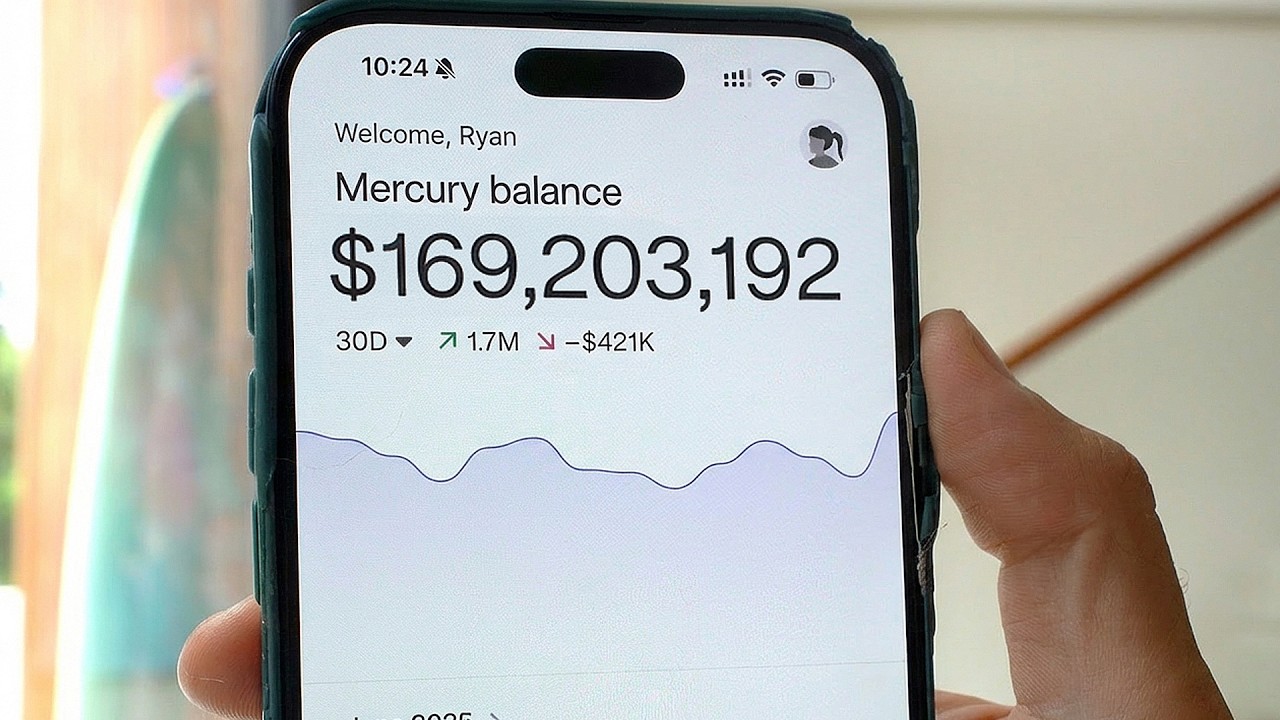
How I built my saas company to $50m/year and sold it for $169m (step by step)
By the time I was 26, my SaaS company was doing $50M in ARR. We had 300 employees, 70,000 paying customers, and we were one of the fastest-growing private companies in America. A year later, we sold for $169M in cash.I’m not telling you that to flex. I’m telling you because I started this business in a college dorm room with a few hundred dollars—and this is the step-by-step playbook of how it actually happened, from the first dollar to a nine-figure exit.

The origin story: the mindset that shaped everything
I grew up in Bradenton, Florida near Tampa. I’m the only son of a minister (from Pennsylvania) and a social worker (from England). My mom—Pauline—was a huge influence. When I was 16, she handed me books like Think and Grow Rich and Rich Dad, Poor Dad, and that’s what really got me thinking about business.
Before I ever thought about “SaaS,” I was a kid who got obsessed with computers and the internet. My uncle Steve gave me my first computer when I was 11. I got into web design and internet marketing, and by 1998 I had built my first website.
That early experience mattered because it set up the first big lesson I’d later learn the hard way: services don’t scale the way products scale.
Dorm room reality: the unglamorous zero-to-one grind
In 2002, as a freshman at UNC Chapel Hill, I co-founded iContact with Aaron Halton. We started in my dorm room. We slept in the office when we had to. It was messy, unglamorous, and defined by experimentation.
I remember working all night. I remember sometimes sleeping through economics class because I’d been building until sunrise. And somewhere in that chaos, I had a realization that changed everything for me.
As a web designer, I could only make money when I was working. That meant the ceiling was built in. If I couldn’t make money while I slept, I wasn’t going to build a scalable company.
So we pivoted—from being an agency/web design shop to building a product-based SaaS solution. This was 2002—“software as a service” wasn’t even a mainstream phrase yet.
The early revenue curve: $12K → $296K → $1.3M (bootstrapped)
Year one, we did $12,000 in sales.
Year two (2003), we did $296,000.
Year three, we hit $1.3M in sales.
And we did it before raising outside capital.
This part of the story is important because it wasn’t “clean.” It was resourcefulness bordering on absurd.
We had servers running in a closet. We were jumping into dumpsters behind Staples to grab proof-of-purchase tags from cardboard boxes so we could mail them in for $50 rebates. We did side jobs as web designers to keep cash coming in so we didn’t have to take salaries until we crossed $1M in ARR.
That’s the real zero-to-one phase: you grind, you sacrifice, and you do whatever it takes to stay alive long enough to find what works.
The $1M ARR milestone: when you stop “hustling” and start building systems
Once we crossed $1M in ARR, the game changed.
We were done going door-to-door for the first $20 customer. We were done with scrappy survival tactics. Now we had to build a real growth engine—systems that could work without us.
This is where most SaaS companies either level up or plateau, because the skills required from $0 to $1M are not the same skills required from $1M to $10M+.
The new job became:
- Figure out unit economics.
- Build multi-channel customer acquisition.
- Build a team.
- Raise capital (once the numbers justified it).
Unit economics: the “magic money system” that makes fundraising easy
Here’s the moment the business became predictable:
Once we knew that $1 in marketing turned into about $6 of lifetime revenue, everything got clearer. If it cost us ~$500 to acquire a customer that turned into $2,000–$3,000 of lifetime value, then scaling became a math problem—not a hope-and-pray problem.
We became obsessed with the core SaaS metrics:
- ARPA (average revenue per account): about $56 (we were SMB-focused)
- Monthly account churn: 3.3% (implying ~2.5–3 years average lifespan)
- LTV: roughly $1,800 (based on ARPA × lifespan)
- CAC: about $400–$500
And because we were venture-backed, we were willing to run at a lower LTV:CAC ratio (around 4:1) to maximize growth rather than optimize for short-term profitability.
Once you have numbers like that, fundraising changes tone completely. You’re no longer selling “a vision.” You’re showing a working engine:
“We turn $1 into $5. Do you want to pour fuel on this?”
Multi-channel acquisition: how we got customers at scale
We didn’t rely on one channel. We built a mix, and we followed the math.
A big chunk—about 60–70%—came through paid digital ads, mostly Google Ads.
Then we had:
- ~15% from SEO/organic
- ~15–20% from affiliates and resellers
We even hired a VP of Business Development (David Roth) to recruit reseller partners—hosting companies, web design agencies, and others—who would promote iContact for 20–25% of the customer’s lifetime revenue.
And we experimented broadly: Google ads, early Meta ads, radio, direct mail postcards. The point wasn’t to be “clever.” The point was: if the unit economics worked, it was a land grab.
Fundraising philosophy: raise after revenue, and keep dilution under control
We raised $500K in 2006 after reaching $1.3M in revenue.
We raised $5M in 2007 after reaching $5M in revenue.
Notice the pattern: we never raised more than ~1x ARR in those early rounds. That helped us stay in control, minimize dilution, and keep three out of five board seats for a long time—until we raised a much larger $40M Series B in 2010.
And here’s a lesson I wish every SaaS founder internalized earlier:
Your customer is not the investor. Your customer is the client paying you money.
Investors invest once you’ve proven you can reliably turn marketing dollars into revenue. Focus on real metrics—revenue growth, profit growth, acquisition, scaling—not vanity metrics like “valuation.”
Scaling from $10M to $50M: the team becomes the product
Getting to $10M is hard. Going from $10M to $50M is a different kind of hard.
At 21 or 22, I had to learn how to be a product manager. I had to learn how to scale acquisition. I had to learn how to present to executives and run roadshows. And the biggest lever was hiring people more experienced than me—leaders who had already scaled companies past $30M, $40M, $50M.
We hired leaders from publicly traded companies and companies with 500+ employees. At scale, we were bringing in 4,000 new customers per month and 20,000 trial users per month.
Right before we sold, we were at:
- 300 employees
- 70,000 paying customers
- $4.1M in monthly revenue
The personal toll: how I learned to lead without burning out
There was a real personal toll being a young CEO in hypergrowth. I had anxiety attacks. I had moments where I didn’t know how I was going to figure it all out.
What helped wasn’t some magic tactic. It was learning to regulate myself:
Meditation. Eating well. Cold plunges. Taking care of my body and controlling my mind so I could show up as a better leader—and attract a team that could help take us to the next stage.
Engineering the $169M sale: timing, process, and the right advisors
In 2010, we raised our Series B from JMI Equity. We hired an investment bank—Allen & Company in New York—to help run the process and raise that round at a $100M valuation.
About a year and a half later, the CEO of Vocus reached out and offered to buy the company for $169M.
We had previously talked to Salesforce and even had Mark Benioff visit us in North Carolina, but we ultimately decided to sell to Vocus instead.
One point I’m blunt about: if you’re raising a big round (think $20–$30M+), a strong investment bank can be worth it. Yes, they take ~2.5% to 4%, but they run the process, create competitive pressure, keep timelines tight, and can drive a much better outcome.
We closed the $169M exit in February 2012. I was 27.
The lessons I’d distill for any SaaS founder today
Looking back, the journey can be distilled into a handful of principles that repeat across almost every successful SaaS story:
First, the mindset: if you want a nine-figure company, think 7–10 years, not a 1–2 year flip.
Second, know your numbers—CAC, ARPA, churn, lifespan, LTV, and LTV:CAC. When you know your numbers, growth becomes a system, not a gamble.
Third, build systems that can make money while you sleep. (That’s the whole point of product.)
Fourth, get great at digital marketing and distribution—paid, SEO, affiliates, partnerships, events, sales. Channels change, but distribution is always the game.
Fifth—and this is the biggest one—you can’t do it alone. The people around you matter more than anything else. Get mentors. Hire leaders with scar tissue. Put yourself in communities where others have done what you’re trying to do.
That’s a big reason why I eventually built SaaSRise (for SaaS CEOs) and GrowthRise (for B2B marketers): I didn’t have a true community of tech founders when I was scaling, and it would have made the journey dramatically easier.